
Insights

Employee DSARs: What the DPC’s 2025 Material Means for Employers
Employee access requests test far more than an employer’s ability to collect documents. They expose how workplace information is written, classified, retained and shared. The Data Protection Commission’s (“DPC”) latest material gives employers a clear warning: routine...
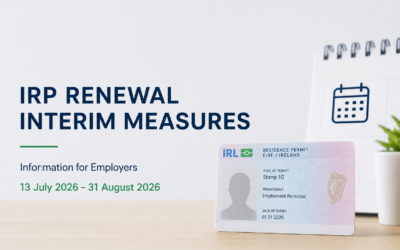
Interim Measures Introduced For IRP Holders
On 13 July 2026, the Department of Justice introduced interim measures in response to the significant volume of applications for the renewal of Irish Residence Permits (“IRPs”) being processed through the Immigration Service portals. The Department has noted that the...
The Elusive Measure of Loss: Compensation and Coherence After O’Connell v Lionbridge
In my recent article titled, “Calculation of Compensation Under the Unfair Dismissals Act, 1977: Consistency Now Required”[1], I argued that there needs to be clarification in respect of how compensation awards are dealt with at the WRC and Labour Court. The recent...

The Employment (Contractual Retirement Ages) Act 2025: What employers need to know (and what to do now)
The Employment (Contractual Retirement Ages) Act 2025 (No. 16 of 2025) (the “Act”) was enacted on 16 December 2025. The Act does not automatically take effect and will commence by Ministerial commencement order, employers should use this opportunity as a “near-term...
New WRC Code of Practice on Access to Part-Time Work
On 22 January 2026, the Minister of State for Small Businesses, Retail and Employment at the Department of Enterprise, Tourism and Employment, Alan Dillon, signed into law an updated Code of Practice on Access to Part-Time Work, prepared by the Workplace Relations...
MyFutureFund Auto-Enrolment – Updated Regulations, Employer Guidance Note and FAQs
OVERVIEW AND KEY DATES With MyFutureFund now live, employers can expect automatic enrolment to become a practical payroll issue rather than a future policy change. The scheme commenced on 1 January 2026 and applies to eligible employees who are not already covered by...
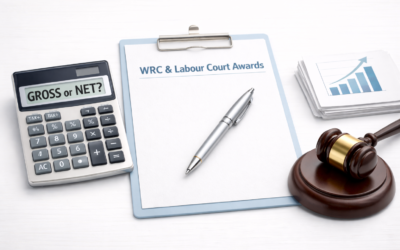
Calculation of Compensation Under the Unfair Dismissals Act, 1977: Consistency Now Required
The Employment Appeals Tribunal (the “EAT”) in the case of Philip Smyth v RSA Insurance[1] awarded the highest award for an unfair dismissal case, €1.25m. To date, that award has not been surpassed but there have been some very significant awards recently[2] and there...

Ireland’s 50:50 Rule: What Employers Need to Know Under the Employment Permits Act
It has now been a year since the most significant overhaul of Ireland’s employment permit system, which took effect on 2 September 2024. The Employment Permits Act 2024 repealed and replaced the 2003 and 2006 Acts (the 2014 Act), aiming to bring greater clarity to a...

Beyond the Firewall: Why Confidentiality Clauses Matter
Confidentiality clauses — better known as non-disclosure agreements (NDAs) — aren’t just legal boilerplate. They’re a frontline defence against losing valuable business, client, and employee information. In every sector, from tech to finance, healthcare to...
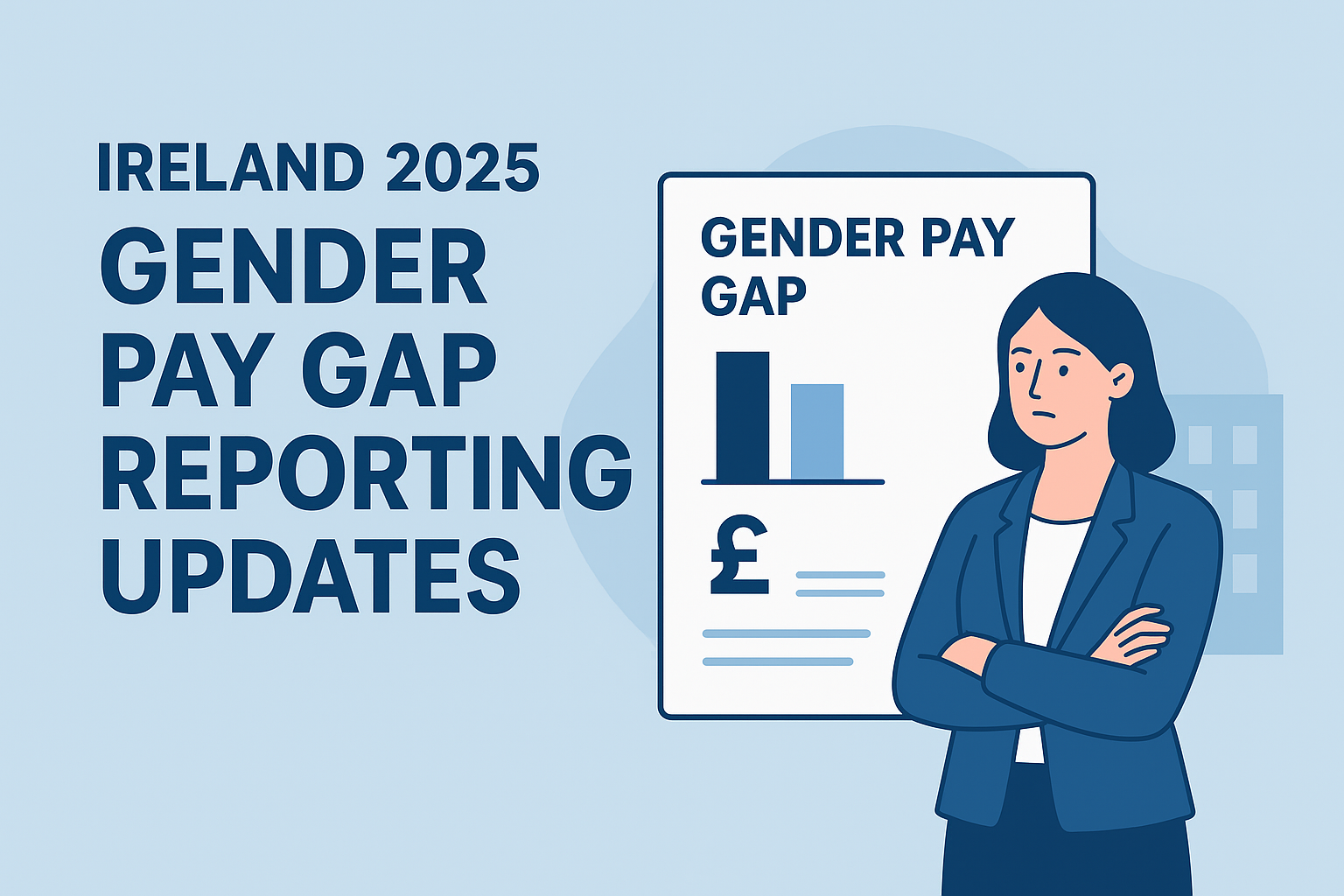
Gender Pay Gap Reporting in 2025
Gender Pay Gap Reporting in 2025: What’s New for Irish Employers? From 2025, gender pay gap (GPG) reporting in Ireland enters a new phase with enhanced regulatory requirements, broader employer coverage, and a centralised reporting system set to reshape how pay...

“You Can Ask…”: Remote Working in Ireland Recap
Between July 2024 and February 2025, seven decisions were issued by the Workplace Relations Commission (“WRC”) under the Work Life Balance and Miscellaneous Provisions Act 2023 (“2023 Act”) in relation to employee requests for remote working. In each case, the...

Alastair Purdy LLP Named National Employment Law Firm of the Year 2025
We are proud to announce that Alastair Purdy LLP has been awarded National Employment Law Firm of the Year 2025 at the Irish Law Awards. This honour reflects the expertise, dedication, and results-driven service that define our practice, and we are delighted to see...

Employing Young Persons in Ireland
Employing Young Persons in Ireland: A Compliance Guide for Employers Seasonal demand, labour shortages, and educational programmes prompt employers to hire staff under the age of 18. In advance of such a hire, It is essential employers understand their obligations...

Employer Spotlight: The Use of GPS Trackers by Employers
Introduction The use of GPS vehicle tracking systems has become increasingly prevalent among employers, offering operational efficiencies and enhanced asset protection. However, these systems involve the collection and processing of personal data, such as location...

Employer Spotlight: No Fault Terminations in Ireland
No-Fault Dismissals and Fair Procedures in Irish Employment Law Introduction The recent High Court decision in Philip Nolan v. Science Foundation Ireland [2024] IEHC 368 has reaffirmed the boundaries of “no-fault dismissals” and clarified the extent to which employers...

Hanley v. PBR Restaurants: High Court Ruling Clarifying De Novo Hearings, Protected Disclosures, and Employment Status Tests
Hanley v. PBR Restaurants LTD trading as Fish Shack Café [2024] IEHC 662, a recent High Court case, has offered valuable guidance on several key employment law issues, including what a de novo hearing is and how it applies to the Labour Court, protected disclosures...

Employer Spotlight: Ireland’s Employment Landscape in 2024 – Key Changes and What to Expect in 2025
EMPLOYER SPOTLIGHT, END OF THE YEAR WRAP-UP: IRELAND'S EMPLOYMENT LANDSCAPE IN 2024 AND BEYOND With December upon us, it is the perfect time to reflect on a year of significant changes in employment law. But what lies ahead for 2025? This article takes a look back at...

Employer Spotlight: Navigating Ireland’s Employment Permit System: Case Study on Unfair Dismissal and Employment Permit Renewal
For non-EEA nationals who are seeking employment in Ireland, obtaining an employment permit is a mandatory step. The Employment Permits Act 2024 (the “2024 Act”) was signed into law on June 25, 2024, taking effect on the 2nd September 2024. The 2024 Act introduces...
Recent Insights
A boutique business law firm, specialising in commercially driven areas of law. With combined teams in Galway and Dublin, we are able to offer clients across Ireland a fully integrated service
091 56 57 65
info@purdyandco.ie


